
Trace minerals are elements the body needs in small amounts — zinc, selenium, chromium, molybdenum, manganese, copper, iodine, and others — that it cannot manufacture and must obtain from food or supplementation.
Why "Trace" Matters
The word "trace" does not mean unimportant. These elements serve as cofactors for enzymes, components of antioxidant systems, and regulators of metabolic pathways. Zinc alone is required for over 300 enzyme reactions. The body needs small amounts — but it needs them consistently, and deficiency creates cascading dysfunction.
The Soil Depletion Problem
Industrial farming depletes topsoil of trace minerals faster than natural processes replenish them. Studies comparing mineral content of produce over decades show measurable declines. The food that fed previous generations nutritionally is not the same food on modern shelves — even from organic farms. The input is lower, and the biology downstream notices.
How Fulvic Acid Connects
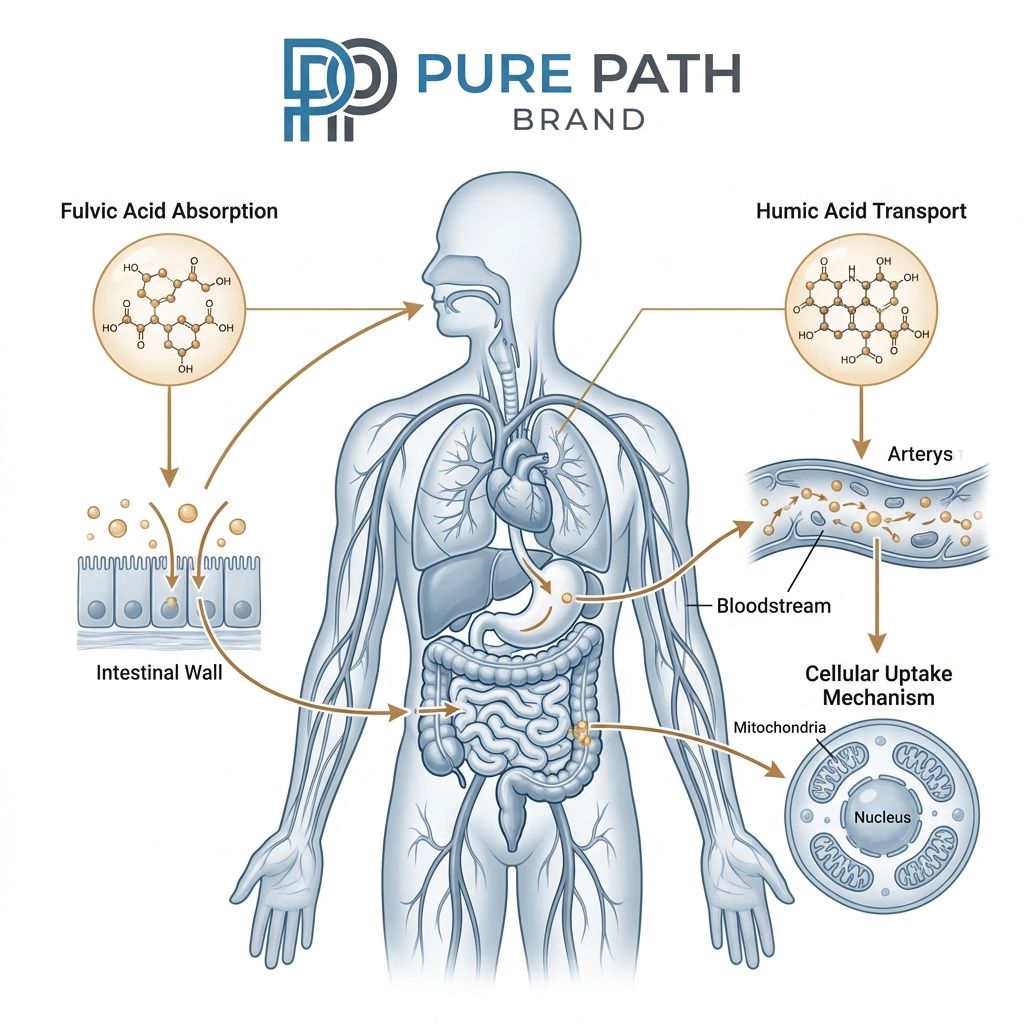
Fulvic acid formed over geologic time in humate deposits naturally contains trace mineral complexes — the same minerals it chelated from ancient soils. When used as a supplement, it serves dual roles: delivering its own trace mineral cargo AND acting as a transport molecule for other minerals consumed alongside it. See Bioavailability Explained.
Common Trace Mineral Deficiency Signs
- Zinc: slow wound healing, frequent illness, taste/smell changes.
- Selenium: fatigue, muscle weakness, thyroid sluggishness.
- Chromium: blood sugar instability, carb cravings.
- Iron: fatigue, pale skin, cold extremities.
These are not diagnostic — consult a physician. But if multiple markers align, the mineral transport layer may be worth investigating.
These statements have not been evaluated by the FDA. Educational content, not medical advice.