
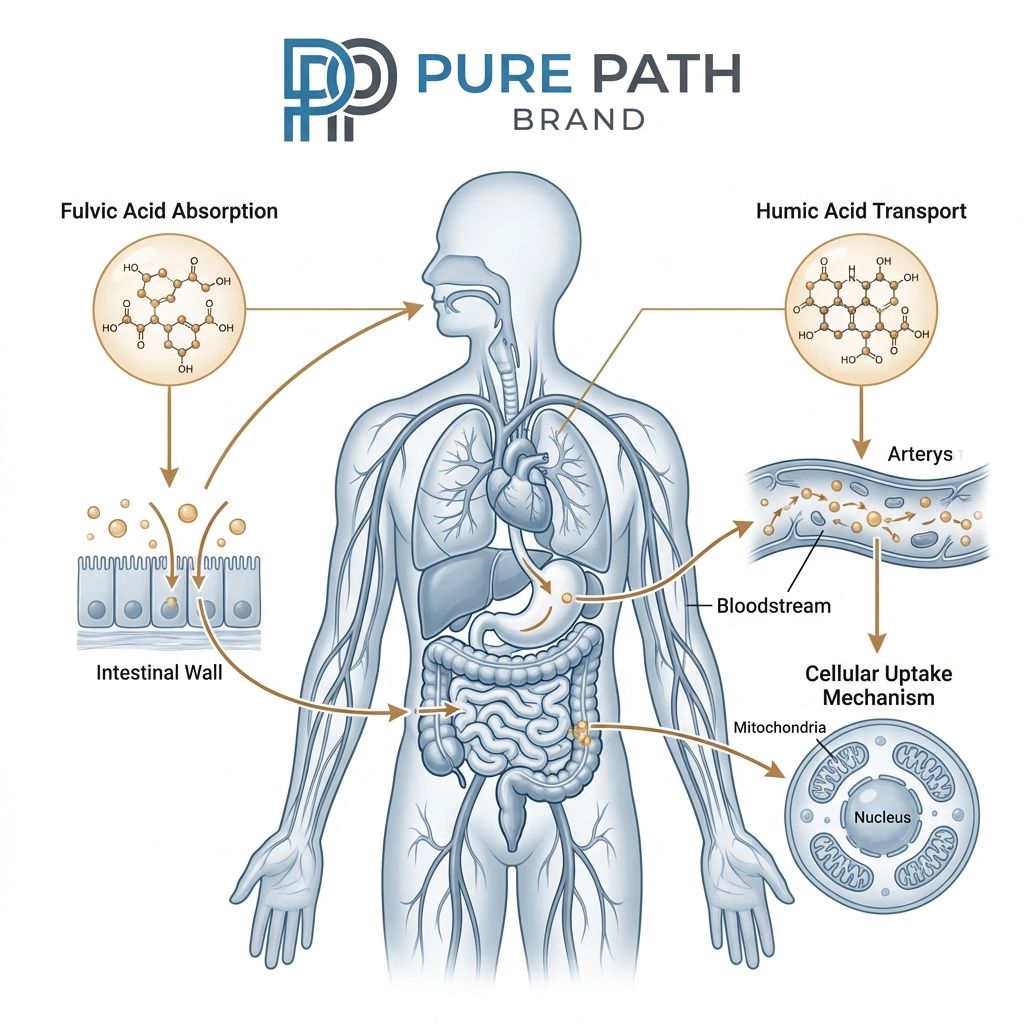
Bioavailability is the fraction of an ingested nutrient that reaches systemic circulation and is available for use by cells. It is the number that matters — not the dose on the label.
Why Bioavailability Is Not 100%
Between swallowing a nutrient and that nutrient reaching a cell, there are barriers: stomach acid degradation, intestinal wall selectivity, first-pass liver metabolism, and membrane crossing at the cellular level. Each step reduces the percentage that arrives. A mineral with 20% bioavailability means 80% of the label dose is wasted.
What Determines Bioavailability
- Molecular form: Magnesium oxide (~4% absorption) vs magnesium glycinate (~80%). The same element in different chemical forms has drastically different uptake.
- Solubility: A nutrient must dissolve in gastrointestinal fluid to be absorbed. Insoluble forms pass through.
- Transport mechanisms: Minerals need carriers to cross cell membranes. Without chelation or a transport molecule, many ions clump into insoluble salts in the gut.
- Competition: Minerals antagonize each other — zinc competes with copper, calcium blocks magnesium uptake.
How Fulvic Acid Relates to Bioavailability
Fulvic acid is a natural chelator. Its carboxyl and hydroxyl groups grip mineral ions and hold them in a soluble, organic complex small enough to interact with cell membranes. This chelation addresses two bioavailability bottlenecks at once: it prevents mineral clumping in the gut and it facilitates membrane transport into cells. See Membrane Transport Explained for the biophysics.
Practical Takeaway
Before spending more on higher doses, consider whether the delivery mechanism is the actual bottleneck. A transport layer (like fulvic acid, taken on an empty stomach before supplements) can shift the bioavailability curve of your entire stack without adding more pills.
These statements have not been evaluated by the FDA. Educational content, not medical advice.