
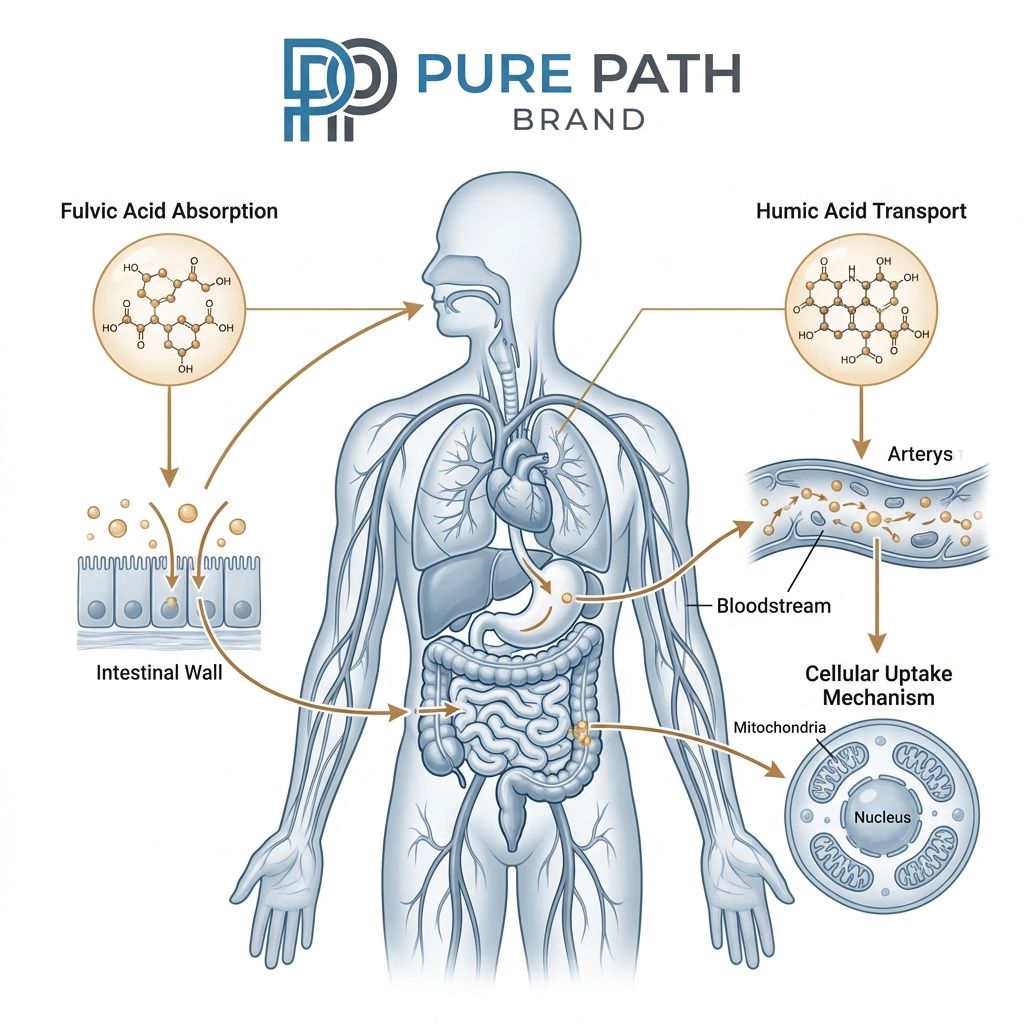
Cellular delivery is the process by which a nutrient moves from the gut lumen, across the intestinal wall, through the bloodstream, and across the target cell membrane to reach the interior where it is actually used.
The Journey a Mineral Takes
When you swallow a mineral supplement, it does not teleport to a cell. The path is:
- Dissolution: the mineral must dissolve in stomach/intestinal fluid.
- Absorption: crossing the intestinal epithelium into the bloodstream.
- Circulation: traveling through blood plasma to target tissues.
- Membrane crossing: moving across the target cell's lipid bilayer membrane.
- Intracellular use: being incorporated into enzymes, cofactors, or structural roles.
Failure at any step means the nutrient never performs its job — regardless of how much was swallowed.
Where Delivery Fails
Common failure modes include: insoluble mineral forms that never dissolve (step 1), poor chelation leading to precipitation in the gut (step 2), and lack of membrane-crossing ability (step 4). This is why two products with the same label dose can produce completely different outcomes.
The Transport-Layer Concept
Fulvic acid acts at steps 1, 2, and 4 simultaneously. Its low molecular weight and pH adaptability keep minerals dissolved across the entire GI pH range. Its amphiphilic structure interacts with cell membrane lipids, facilitating mineral passage into the cell. It is not a nutrient — it is the delivery infrastructure that makes nutrients count. See Bioavailability Explained and Delivery vs Dosage.
These statements have not been evaluated by the FDA. Educational content, not medical advice.