
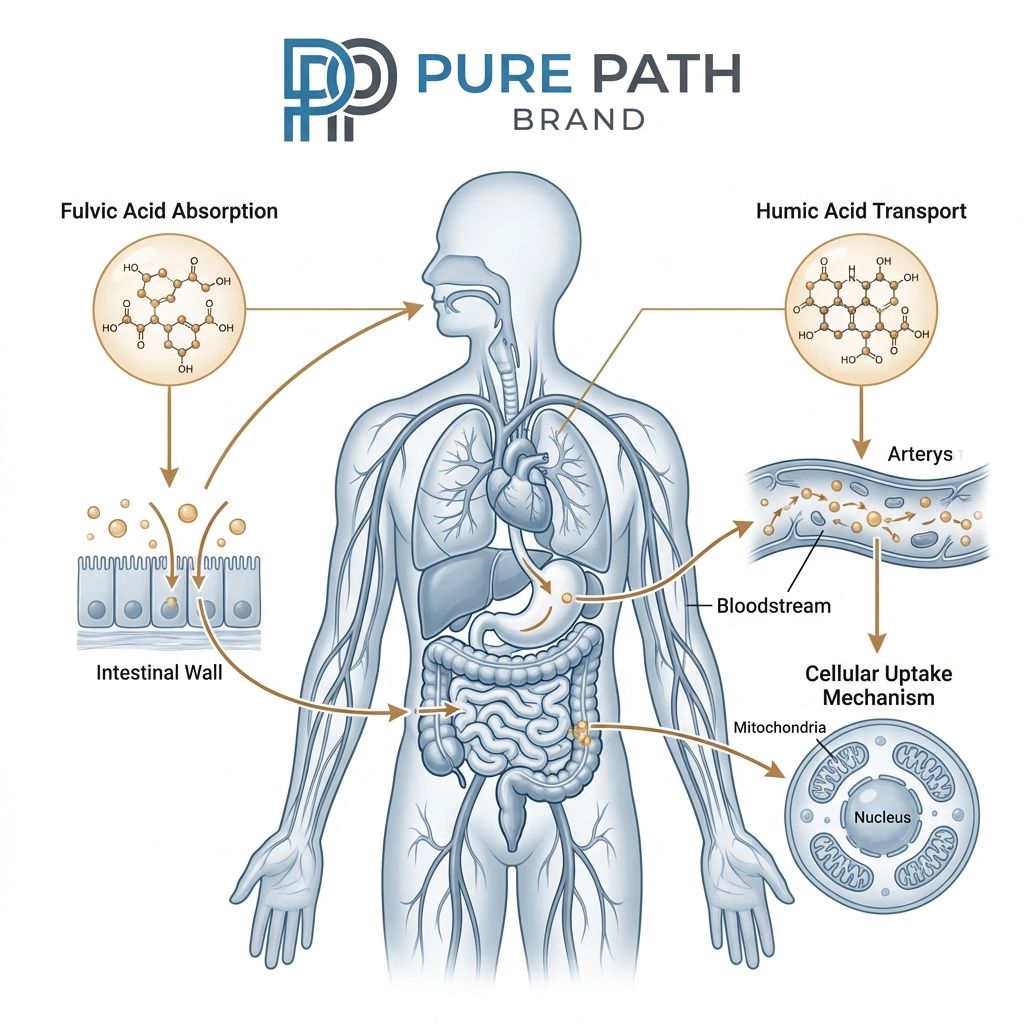
Heavy metal binding is the process by which a molecule with high-affinity chelation sites complexes toxic metal ions — lead, cadmium, mercury, arsenic — preventing their absorption and supporting their removal from the body.
Where Heavy Metal Exposure Comes From
Heavy metals are not limited to factory workers:
- Occupational: welding (chromium, manganese), auto repair (lead, cadmium), painting (lead), plumbing (copper, lead), shooting ranges (lead).
- Environmental: old paint, contaminated water, dental amalgams, seafood (mercury), rice (arsenic).
- Chronic low-grade: most modern adults carry some burden from decades of ambient exposure that accumulates faster than the body clears it unassisted.
How Humic Acid Binds
Humic acid molecules are large, polyaromatic structures with dense arrays of binding sites — carboxyl, phenolic hydroxyl, and carbonyl groups. In the gut lumen, these sites have documented affinity for heavy metal cations. Bound metals form stable humic-metal complexes that transit the digestive tract and exit the body rather than being absorbed into systemic circulation.
Why Humic (Not Fulvic) for Binding
Fulvic acid is small and designed to cross membranes — you do not want it carrying metals INTO cells. Humic acid is large and stays in the gut — exactly where you want a binder to work. The size difference is not a flaw; it is the mechanism. See Fulvic vs Humic for the full comparison.
Protocol Considerations
- Take humic acid away from food, medications, and supplements — a binder does not discriminate.
- Hydrate well — binders work better in a hydrated gut.
- Pair with fulvic acid on a separate schedule for delivery support.
These statements have not been evaluated by the FDA. Educational content, not medical advice.