
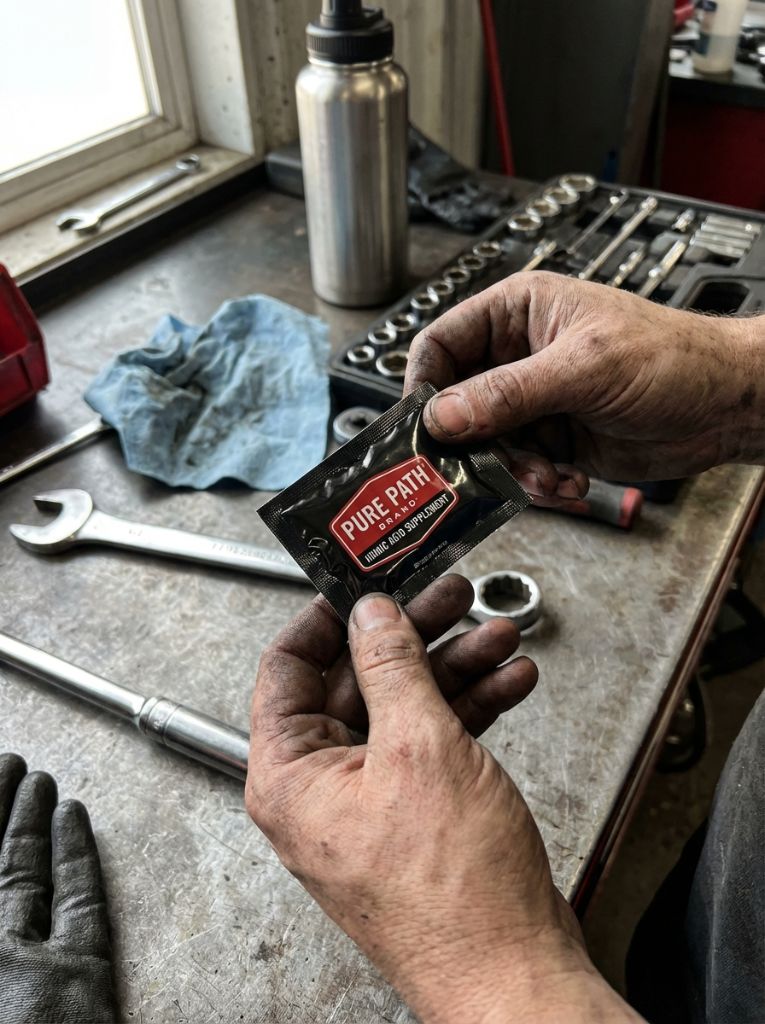
I spent two years testing liquid fulvic products before concluding they were mostly expensive water — and building something different. This is the founder story behind Pure Path Northwest, told through formulation decisions rather than marketing copy.
The Liquid Problem
When I first encountered fulvic acid — deep in research on occupational heavy metal exposure from my own trades background — the market was dominated by liquid tinctures. Brown bottles with droppers, selling 2oz of dilute fulvic solution for $30–50.
The economics didn't make sense. Fulvic acid is water-soluble and shelf-stable in dry form. Shipping water weight is expensive. Diluting an active compound means you're paying per milligram at a massive premium. And the concentration was rarely disclosed clearly — most labels said "fulvic acid" without specifying actual active content per serving.
So I started asking: what is the actual fulvic acid concentration in these products? The answers were revealing:
- Many liquid products contain 100–300mg of fulvic acid per full bottle (30 servings).
- Per-serving fulvic content: often 3–10mg in a "full dropper."
- Meanwhile, research doses in the literature use 250–500mg of purified fulvic material.
- The gap between what people are buying and what the research supports is 25–100x.
Why Powder Changes the Math
A 60g pouch of purified fulvic acid powder at proper concentration gives you:
- 120+ servings at 500mg per dose.
- No water weight — you're shipping active compound, not solvent.
- Transparent dosing — a measured scoop gives a known quantity.
- Longer shelf life — dry powder is more stable than aqueous solution over time.
- Lower cost per effective dose — by an order of magnitude versus premium liquids.
The trade-off is convenience. A dropper is easier than measuring powder into water. But I decided that giving people a functional dose at an honest price mattered more than making it slightly easier to underdose with a pipette.
The Extraction Decision
Once the format was settled, extraction method became the defining decision. The industry uses three primary approaches:
- Alkaline extraction (KOH or NaOH) — cheap, fast, high yield. Degrades functional groups through harsh pH exposure.
- Acid extraction — uses HCl or sulfuric acid to dissolve humate. Can introduce contaminants and damage molecular structure.
- Cold-water extraction — slow, lower yield, expensive. Preserves the carboxyl and hydroxyl groups that give fulvic its transport behavior.
I chose cold extraction because the entire value proposition of fulvic acid depends on those functional groups being intact. A degraded fulvic molecule might pass a lab assay but fail at the job: carrying minerals across membranes. The yield loss and higher cost were acceptable trade-offs for a product that actually works at the molecular level.
Sourcing Transparency
Pure Path sources from domestic (Utah, USA) humate deposits. This isn't romantic — it's practical:
- Auditable chain of custody — from deposit to extraction to packaging, within US regulatory oversight.
- Batch-specific Certificates of Analysis — heavy metal testing, microbial testing, fulvic/humic content verification on every production run.
- No import uncertainty — many imported shilajit and fulvic products have tested positive for lead, arsenic, and mercury above acceptable limits.
Why I'm Telling You This
The supplement industry thrives on opacity. Proprietary blends, undisclosed concentrations, exotic sourcing stories that can't be verified. I built Pure Path to be the opposite: transparent sourcing, honest dosing, clear extraction method, batch-traceable testing. Not because transparency is trendy — because these molecules matter to people whose health depends on them working.
If you're a welder inhaling chromium fumes or a mechanic soaking in brake solvents, the last thing you need is another underdosed, over-marketed product that makes claims without delivering milligrams. You need the real thing, at a real dose, from a real source — and you need to be able to verify all three.
That's why I switched to powder. That's why Pure Path exists.
These statements have not been evaluated by the FDA. This article reflects the founder's experience and perspective.